
(in progress)
Research grows through conversation. Conferences, workshops, and talks are where I test ideas, discuss work in progress, learn from other disciplines, and translate findings beyond individual publications. Over the past years, my presentations have followed the development of my research – from psychological reactance, freedom, and political motivation toward a broader understanding of resistance, conflict, and difficult conversations.
This page provides an overview of my academic conference presentations, research talks, posters, and invited contributions. If you are looking for my work beyond academic conferences – including keynotes and public talks, moderation, workshops on difficult conversations, or research-based communication formats – please visit the page communication and workshops..
I am always happy to discuss invitations, collaborations, or simply an idea that connects to my work.
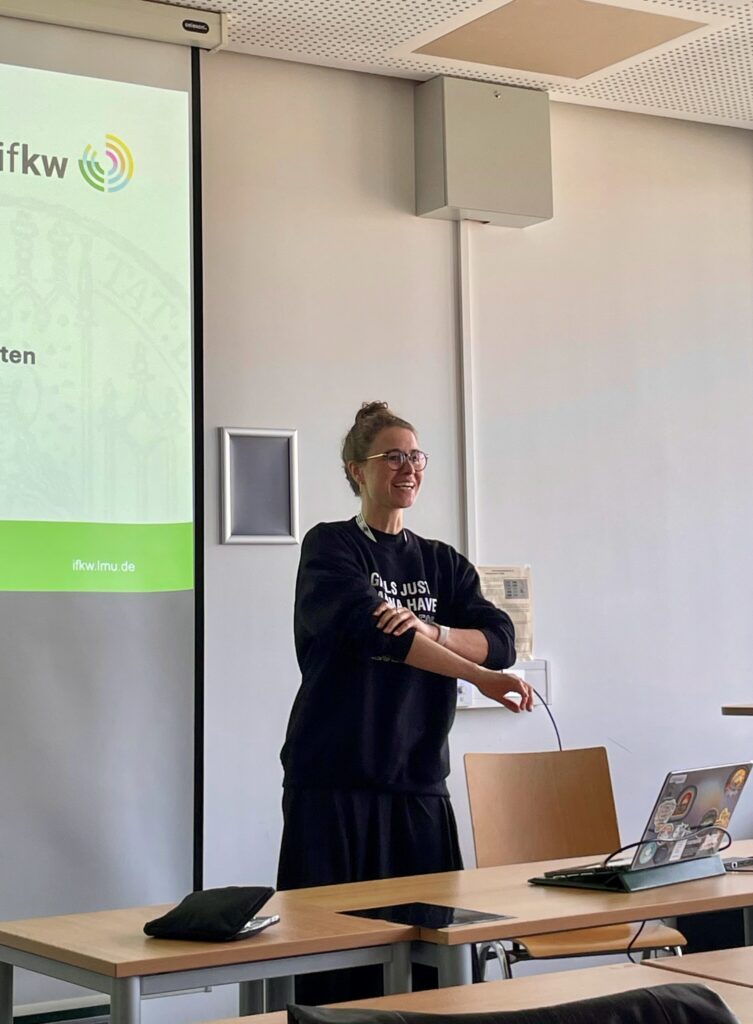

Talks in 2026
In 2026, my presentations increasingly brought together the different strands of my research around psychological reactance, resistance, conflict, and difficult conversations. Across conferences in conflict management, political psychology, and psychology, I presented work that moves beyond understanding resistance as a simple failure of persuasion and instead examines it as an emotional, communicative, and socially consequential process.
Where did I travel:
At the DGPuK Annual Conference, I focused on how psychological reactance becomes visible in language, introducing a typology and analytical space for different forms of written resistance in digital publics. The framework moves beyond overt disagreement to capture more subtle communicative forms of reactance, including avoidance, diversion, justification, and responsibility delegation. At subsequent conferences in conflict management, political psychology, and psychology, I expanded this perspective from written resistance toward the processes underlying resistance, interpersonal conflict and de-escalation, and ultimately the question of how people can learn to navigate difficult political conversations.
At the International Association for Conflict Management (IACM) in Vienna, this included the theoretical development of the Psychological Reactance Process Model as well as collaborative empirical work on the “grammar of de-escalation”: how seemingly small linguistic choices can shape anger and conflict outcomes. The latter study compared six forms of feeling statements across 1,165 students, civilians, and military veterans.
At the International Society of Political Psychology (ISPP) in Newcastle, I presented several complementary perspectives on freedom and resistance: the process-based conceptualization of reactance; a typology of written resistance in digital discourse; the historical development of freedom and autonomy within six decades of reactance research; and an exploratory study of how unexpected positive encounters can disrupt negative stereotypes in political conversations. The genealogy project, for example, maps 1,086 publications from 1966–2025 to trace how reactance and freedom developed across disciplines. The conversation study used a mixed-method field design with 23 pairs to examine how stereotype expectations change through direct political interaction.
At the German Psychological Society (DGPs) meeting in Luxembourg, I extended this work toward intervention and learning: rather than asking only how political conversations break down, the presentation considers what people need to learn to remain engaged across political difference—and how AI-supported practice might help build and transfer such conflict competence.
Together, these presentations mark a broader development in my research: from explaining why we resist toward understanding how resistance unfolds in interaction, when conflict escalates, and what people can learn to navigate difficult conversations differently.
Overview:
Talks in 2026
Annual Meeting of the German Psychological Society (DGPs) (09/2026), Luxembourg
Talk: Learning to Stay in the Conversation: Using AI to Practice Conflict Competence under Political Disagreement — contribution to the symposium on affective polarization, connecting research on conversational breakdown with experiential learning, feedback, human–AI interaction, and transfer to human–human political conversations.
International Association for Conflict Management (IACM) Annual Conference (07/2026), Vienna, Austria
Talk: Rethinking Resistance – A New Interdisciplinary Model for Psychological Reactance
Data Blitz: The Grammar of De-Escalation: Using Pronoun-Based Feeling Statements in Anger-Loaded Interpersonal Conflict (with Steven Winer, Zachary R. Glowacki, Leslie Ramos Salazar, Christopher R. Glowacki, William Howe, Arrington Stoll & Zachary M. Carr). The presentation took place on July 7, 2026.
49th Annual Scientific Meeting of the International Society of Political Psychology (ISPP) (07/2026), Newcastle, United Kingdom
Talk: Written Reactance – Typology and Resonance Space of Digital Resistance
Talk: Rethinking Psychological Reactance: A Process-Based Model of Resistance for Political Psychology— presenting the Psychological Reactance Process Model (PRPM) and its first empirical test.
Poster: Freedom Conflicts as Political Psychology: A Genealogy of Reactance and the Societal Meaning of Autonomy Claims
Poster: When Expectations Break: Stereotype Misalignment and Positive Emotional Shifts in Political Conversations
71st Annual Conference of the German Communication Association (DGPuK) (03/2026), Technical University Dortmund, Germany
Talk: Archetypen schriftlicher Reaktanz in digitalen Öffentlichkeiten – Ein Analysesystem für Widerstand in Worten
Presentation of a new analytical framework for identifying and systematizing written psychological reactance in digital public discourse. Based on online comments from an experimental study, the framework maps resistance within a multidimensional “resonance space” and distinguishes eight archetypes of written reactance, ranging from constructive criticism and argument-based resistance to aggressive diversion, avoidance, and responsibility delegation.
Talks in 2025
In 2025, my presentations centered on rethinking psychological reactance for contemporary political and crisis communication. A central concern was how freedom threats move from individual psychological experiences into communication and public discourse—and how resistance can be measured not only through self-reports, but through the ways people communicate.
Where did I travel:
At the annual conference of the political communication sections of DGPuK, DVPW, and SGKM, Lara Kobilke and I presented our work on reactance in political campaigns under the title From Pushback to Participation. The project links political freedom narratives to a process perspective on reactance, distinguishing the appraisal of a freedom limitation from the subsequent motivational and emotional mobilization toward resistance.
Later in the year, I translated this research into a more applied setting at the National Working Group Crisis Management at Schneefernerhaus on the Zugspitze. The talk addressed paradoxes of resistance and the practical challenges they create for crisis communication: communication intended to produce cooperation can itself become a source of perceived pressure, resistance, or disengagement.
At the International Communication Association (ICA) Annual Conference in Denver, our work further developed this perspective in the context of environmental communication. This research formed part of a broader effort to understand how communication around sustainability and collective behavioral change can inadvertently trigger freedom threats—and how communication can acknowledge autonomy without abandoning the need for collective action.
Taken together, the 2025 presentations represent an important transition in my work: from treating reactance primarily as an individual response to persuasion toward a multidimensional process of appraisal, emotion, motivation, and communicative resistance—a foundation for the conflict-focused work that followed in 2026.
Overview:
Talks in 2025
Annual Conference of the Political Communication Divisions of DGPuK, DVPW & SGKM (02/2025)
Talk: From Pushback to Participation: Rethinking Reactance in Political Campaigns (with Dr. Lara Kobilke).
75th Annual Conference of the International Communication Association (ICA) (06/2025), Denver, USA
Presentation: Research on psychological reactance and environmental communication, examining freedom threats, resistance, and communication around sustainability.
Award: Best Paper, Environmental Communication Division.
National Working Group Crisis Management (09/2025), Schneefernerhaus, Zugspitze
Talk: Paradoxes of Resistance and Challenges for Communication.
Past Conferences (selection)
74th Annual Conference of the international Communication Association | 06/2024 | Gold Coast, Australia
Talk: Constructing a Climate of Compliance – Understanding Reactance to Pro-Environmental Messages (full study)
Talk: Take back control!“ Measuring Psychological Reactance as a Mobilizing Force for Collective Action
Talk: Look! Don’t Look! Reactance in multimodal framing
Funded by the German Academic Exchange Service (DAAD)
53. Annual Meeting of the German and Austrian Association for Psychology | 09/2024 | University of Vienna
Symposium: ‚New insights in psychological reactance from an affective, cognitive, cultural and neuropsychological research perspective‘
Research Talk: Constructing a Climate of Compliance – Understanding Reactance to Pro-Environmental Messages (Prediction of Behavior)

69. Annual Meeting of the German Communication Association | 03/2024 | University of Erfurt
Annual Meeting of the German Communication Association (03/2024), University of Erfurt
Talk: Constructing a Climate of Compliance – Understanding Reactance to Pro-Environmental Messages (As speaker for the shared Project with Dr. Lara Kobilke and Dr. Maximilian Krug)
Talk: Paradoxes of Resistance with COVID-19 Measures: Exploring State Reactance as an Emotional Process
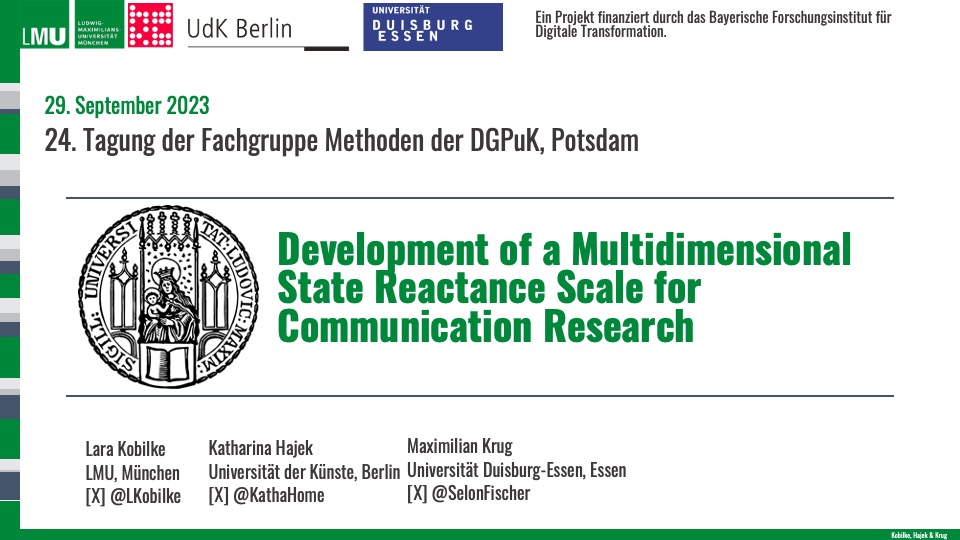
Annual Meeting of the methods working group of the German Communication Association | 09/2023 | University of Potsdam
Talk: Development of a Multidimensional State Reactance Scale for Communication Research (As speaker for the shared Project with Dr. Lara Kobilke and Dr. Maximilian Krug
Annual Meeting of the Association for applied linguistics (09/2023), Johannes-Gutenberg-University of Mainz
Talk: Practices of denial – Communicative handling of restrictions in the context of environmental crisis management (Speaker: Dr. Maximilian Krug, Presentation of our shared project with Dr. Lara Kobilke & myself)
JAVNOST –The Public, Workshop (01/2021)
Free University of Berlin, University of Copenhagen, Weizenbaum Institute
Talk (online): Paradoxes of Reactance during the COVID-19 Pandemic
International Hybrid Conference of the Research Association NRW Digital Society (09/2022)
“Quo vadis Digital Democracy? Strengthening and Preserving Democracy in the Digital Age”
Talk (online): Freedom and Control Narratives as Political Motivators on Social Media Platforms
NapoKo Colloquium (11/2020), Dpt. of Political Communication, German Communication Association
Talk (online): “Political Reactance: Dynamics of Opposition”
Doctoral Scholarship Holders Conference of the foundation of the German Economy (sdw) (09/2021)
Talk (online): Narratives of Political Reactance & Science Slam: Freedom